

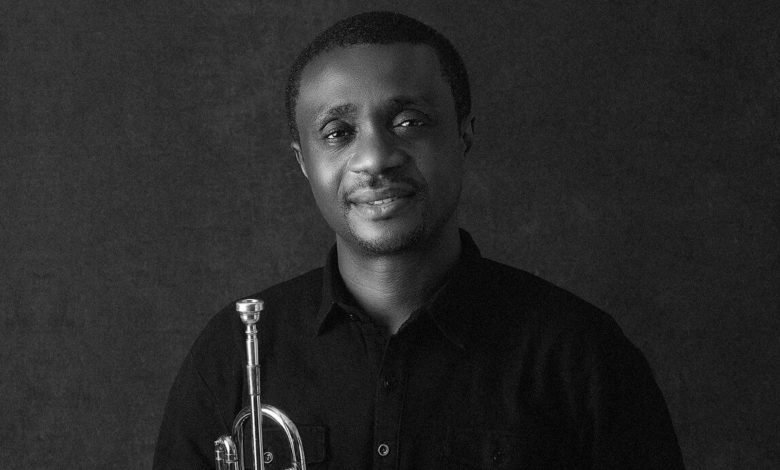
In an interview with Pastor Sola of the Beneath the Surface podcast, Nathaniel Bassey discussed his life, how the Hallelujah Challenge was birthed, and how his ministry has grown over the years.
Pre and post pandemic, he saw God moving towards the digitalisation of the gospel and breaking the barriers of time and distance. At the heart of this global move was the Hallelujah Challenge.
The Hallelujah Challenge began as a platform for intercession, prayers, worship, and praise that kept our altars burning. What began as a spontaneous online session on Instagram in 2017 has since evolved into a global event that breaks geographical, cultural, and denominational barriers, getting millions to participate in real time.
What is Nathaniel Bassey’s Hallelujah Challenge
The Hallelujah Challenge is an hour-long online praise and prayer program held at midnight. It emphasises the warfare aspect of worship. “Hallelujah” is rooted in the Hebrew word Halel, which symbolises a crazy, loud, and seemingly foolish kind of praise to God. Adding a “challenge” to it draws commitment out of participants to praise God for a set number of days.
During these programs, there are sessions of praise, worship, prayers, and prophetic declarations. It starts from 11:59 PM to 1:00 AM daily for 21 or 30 days, streamed on YouTube, Instagram, TikTok, and Facebook. It builds on the knowledge that high praise is a key to breakthrough, deliverance, and divine intervention. Christians all over the world resonate with these truths and unite in one voice to give adorations, forming a sense of global unity that physical buildings could only dream of.
Who is Nathaniel Bassey?
Nathaniel Bassey was born on August 27, 1978, into a Christian home in Akwa Ibom State, Nigeria. His upbringing was deeply rooted in the Apostolic Church, where his father was a minister. This gave him a strong background in liturgy. He studied International Relations and Studies at the University of Lagos, and later studied music at the Middlesex University Summer School in the United Kingdom.
He reminisced that his entry into music was actually through the secular jazz circuit, where he gained a pedigree as a master trumpeter and band leader of the Steve Rhodes Jazz Orchestra. He noted being influenced by icons like Louis Armstrong and Miles Davis, before later finding his own style and prophetic sound that is infused into his songs.
He did not discredit the place of hard work in his sound, but says,“Artistry sadly does not come by prayer and fasting. It comes by practice because music is a tool that is deployed in worship. It is not the worship itself.”
He produced his debut album in 2008, and since then, he has released songs that stir the souls and spirits of many toward God. Aside from music, he’s a pastor at The Oasis, the youth wing of The Redeemed Christian Church of God, The King’s Court in Lagos. His life reflects skill and spirit, causing a generation of Christians, especially music ministers, to envision the possibilities in Christ.
How Hallelujah Challenge Started
In April 2017, he attended a retreat with his friends in Israel. At this retreat, he said, one of his friends, Pastor Ben, told him, “God is about to begin a movement with you.”
God used his prophetic friends to remind him of a vision that had been in his heart for years. He said God had told him that He would raise an army, and that impression remained strong in his heart. At the time, he didn’t know exactly what to do, but he knew he had to wage war with those words and decided he was going to pray.
He was led to host a 31-day online prayer movement, the Tongues Challenge, that focused on prayer for a long time. In June 2017, he felt a tug to transform it into a month-long midnight praise session, and so the Hallelujah Challenge was born. The first edition was broadcast live from his living room with over 1,000 participants. Within 15 days, that number grew to 60,000 across Facebook (9,000+) and Instagram (6,000+). He knew there was no denying what God was about to do with the Hallelujah Challenge.
The public, however, had mixed feelings about it. Some were in awe at the simplicity and intensity of the worship and declarations. Others thought online spirituality was questionable and that the emphasis on midnight vigils was pushing it too far. Some have even argued that God cannot be moved by a “challenge.”
Despite the critics, #HallelujahChallenge dominated the social media space and captured the attention of international media outlets like CNN. This success laid the foundation for the perennial program we know today.
Why Midnight?
Bassey’s decision to hold the challenge at midnight is rooted in Acts 16:25-26, where Paul and Silas praised God at midnight and were miraculously released from prison. He points out that the midnight hour is a time of spiritual vulnerability and deep concentration, as the distractions of the day are eliminated.
While there are other night watches, the midnight watch is significant for being the first of each day. Staying awake to offer praise to God was a challenge, but one that was welcomed by participants as it reaffirmed their commitment to God. In Nigeria, it starts at 11:59 PM WAT, but because participants tune in from all around the world, it is truly a 24-hour cycle of prayer, worship, and declarations.
How Long is the Hallelujah Challenge?
It is structured to run for 21 or 30 days per edition. Each edition is given a theme that sets the spiritual tone. For example, the February 2026 theme was MERCY, focusing on the goodness and thanksgiving of God rather than personal petitions.
The sessions follow a consistent pattern of opening high praise, scripture reading, prophetic declarations, and then testimonies. Over the years, editions have evolved, such as the Oct/Nov 2022 edition that had two phases. Some editions now end with a festival, a physical gathering in Lagos where people complete the challenge together.
How to Join and Participate
Joining the challenge is done through Nathaniel Bassey’s official social media outlets. Participants connect via YouTube (NathanielBasseyMain), Instagram (@nathanielblow), or Facebook Live. Participation is open to everyone globally, showing its non-discriminatory reach.
While it’s an online program, Bassey advised participants to take it with all spiritual solemnity and observe an evening fast from 6 PM to midnight leading up to the session.
He said, “It was something we did in the past and realised it was very impactful. A lot of people testified that it was spiritually and medically rewarding. The fast is spiritual training that helps to subdue the flesh, helping the spirit man to gain ascendancy. The word of God is clearer and you hear more because the flesh is subjugated and suppressed.”
He emphasises journaling of prayer points, prophetic words, and the names of people that need intercession. Physical preparation tips included finding a quiet place, ensuring the network is strong, and deciding to use your voice, hands, legs, and dance steps.
Hallelujah Challenge and Social Media
The role of social media in the success of the challenge cannot be overemphasised. By using apps like Instagram and YouTube, it bypassed the traditional pathway of religious broadcasting, allowing for direct connection between people and the minister. It’s an excellent picture of digital revival and exactly what the church needed to see, that God uses every medium to reach souls.
Social media provided a low-cost, high-access platform that gave thousands of Nigerian Christians in the diaspora the opportunity to praise and pray together. They were drawn by how authentic it felt, even through a screen, and when their hearts connected, the Hallelujah Challenge became a ground of corporate breakthrough and salvation.
Worship, Music, and Viral Songs
Music is at the centre of the Hallelujah Challenge. It has many popular worship and praise medleys that blend African rhythms and hymns with contemporary gospel. One of the most popular is Olowogbogboro by Nathaniel Bassey and Wale Adenuga, released after the 2017 edition. The song speaks of God’s mighty hand and how it always comes through for us in our toughest times.
Official Hallelujah Challenge worship and praise medleys have been released over the years on albums like Hallelujah Again (2021). These medleys have gained millions of listens, breaking cross-cultural and lingual barriers.
Testimonies, Miracles and Public Impact
The impact of the Hallelujah Challenge has been verified by participants through the barrage of testimonies they brought forward. Often given are amazing miracles of healing, financial breakthrough, marital restoration, and open doors. From the seemingly little things like safe deliveries to jaw-dropping feats of divine intervention like dramatic job opportunities.
Even in his own life, the Hallelujah Challenge has birthed testimonies. He spoke of a particular power night when they had finished and everyone was resting in his house. One of the generators they used caught on fire and they were all trapped, but God rescued them. He said if not for that intervention, he would have died with his whole family.
One easily overlooked impact is the psychological and emotional strength it gives participants. In times of crisis and confusion, like the 2020 lockdown, the challenge provided hope and community for millions who were isolated and afraid. Post-lockdown, as the world changed, it gave participants a safe place to pour out their hearts in praise and build their faith in God amid the times.
Nathaniel Bassey Refuses to Monetise the Hallelujah Challenge
Despite the success of the Hallelujah Challenge, Nathaniel Bassey did something no one expected. He refused to monetise it.
The 2025 edition recorded millions of views across social media platforms, and he gained more than 4.7 million subscribers and over 1.5 million views on his channel. Reports claimed he could have generated over 1 billion naira in revenue due to its massive reach.
During the Day 23 live session that year, he told his followers his decision not to monetise. He said, “People are dragging me because I didn’t monetize my YouTube channel for the Hallelujah Challenge. I won’t monetize it. God didn’t tell me to.”
While most people respected his decision, it sparked debates about him missing out on a good way to raise funds for Christian activities. Bassey stood by his decision and, when scammers cloned his account, warned participants to use only his official handles.
He believes there are other ways God can bless him, just as the Hallelujah Challenge is being a blessing to others. He spoke about this: “They have dragged me. When you monetize they would say you are doing ministry for money. They would say you are trying to be proud when you do not. We will not monetize it. I am not led to. God will bless us in some other way.”
Criticism, Controversies and Negativity
Regardless of its popularity and selfless nature, the Hallelujah Challenge faced heavy criticism from various schools of thought. The Gospel Coalition for Africa wrote that the whole thing was a product of selective interpretation of scriptures and was promoting prosperity gospel. Concerns were also raised about the quick-fix nature of online programs and whether it would slowly eat away at a culture of deep commitment to being part of a local church.
Nathaniel Bassey responded to these criticisms by saying the challenge is an interdenominational gathering meant to supplement and not replace church services. And when participants wanted to engage in the argument, he advised them not to get dragged into it, as it could affect their spiritual focus during the challenge.
Is Hallelujah Challenge a Revival Movement?
This question is answered by millions of participants and supporters. It has helped them create digital altars of corporate worship and filled them with hope that God moves freely and powerfully through social media. Many young people are particularly drawn to it for its authentic spiritual environment and how it soothes their soul.
The challenge is also very appealing because it only requires one hour from participants. Simple yet effective. It makes them value the time spent with God and deepens their commitment to Him.
Practical Information and Safety
Participants seeking official connection to Nathaniel Bassey’s Hallelujah Challenge can do so through his verified social media handles. The official website also provides information on partnerships, past editions, and announcements.
It’s important to the organisers that participants are safe from scammers who ask for money or claim to offer private prayers. They are urged to check for the verified badge on the handle or get information directly from the Hallelujah Challenge official website.
Lessons from Hallelujah Challenge
The Hallelujah Challenge offers so many lessons to the contemporary church. It shows the power of consistency and little beginnings. What started in a living room is now a stadium-filling program. It also shows how digital ministry is a potent tool in the hands of God. Genuine community and sharing of the gospel can be done online.
For individuals, it teaches us the power of prompt obedience to divine instructions and how effective praise is in warfare. He said, “You have to be intentional in speaking words over yourself,” emphasising how the challenge teaches us to prioritise prophetic watches, vigils, and declarations, proving that even in our distracted digital age, we can hear God loudly.
Conclusion
The Hallelujah Challenge didn’t dismiss Gen Z platforms like YouTube and Instagram. Instead, it used them to reach millions online with sound teachings, prophetic watches, and declarations, which are all essentials of Christianity. This shows that there is a deep-seated hunger for God in the online space, and there are God-given solutions to meet that need.